Just Waiting
I was looking everywhere
Climbing every mountain that I might know the heavens
Testing every mud filled obstacle that I might be strong
Pushing ahead of everybody that I might be most worthy
You were there all along
At my own hearts door
Just waiting
With flowers in the hollow of your hand
And the stars of a universe in your eyes

Peacemakers are those who work hard to live like Jesus.
The Peacemaker can feel a bit like a rock and a hard place. Not on this side. Not on that side. A place where one can listen and turn knowledge into wisdom and ideally share and spread that wisdom into all the corners. Even the dark and shadowy corners. Cultivating peace…without causing or condoning harm.
Trying to be a peacemaker can feel something like being trapped in the middle of a fighting ring and having no idea how to get out. A fighting ring surrounded by spectators, spotlights, flashing strobe lights, cameras flashing, video rolling, and it’s so LOUD. Maybe this feels a bit like life all the time. Everybody’s watching. And it’s so LOUD.
Opponents come out and we start sizing one another up. We get nervous (think: fear). We start to compare and categorize to better understand who, and what’s, before us. We put things into corners and sides. This goes here. That goes there. Everyone goes into a box, even if it doesn’t quite fit. Boxes are comforting. Things that don’t fit are threatening. We don’t know what to do with things that don’t fit our familiar way of looking at things. We don’t know how to respond. That feels kind of dangerous.
Where does the peacemaker go? How do we establish peace in the middle of the fighting rings?
Anyone who’s ever been in the position of peacemaker knows how hard it is. Trying to see all sides, trying to be fair and balanced, and being attacked (it seems) by all sides. “If you’re not with us, you’re against us” mentality…how can we ever expect peace when that’s the line?
How can we be peacemakers when we’re facing off and our own fears and emotions are rising? When we’re under attack? And maybe we feel like attacking? Or have already started the attack because, well, we’re right!!
Sometimes, it seems like we’re set up for failure. Much of the Beatitudes are qualities we don’t really value. We talk about them as valuable, but do we?
Peace is one we talk about a lot, but do we live it? Truly live it? In the big ways and the small ways? Socially and in our own small lives? What we live, spreads.
These next few thoughts can apply to the big world and also our own small lives.
We long for and talk about peace, but we’re constantly preparing for war. We call it defense and protection and self-preservation. Sometimes, we call it boundaries, but remember, boundaries are there to protect us from harm, but not as an excuse to avoid what’s just “annoying”. But what happens when we continually engage with others in life in “defense mode”? Does it ever goes peacefully or in any way that feels kind? We’re meeting armor with armor, sharpening our weapons to meet challenge. Even in our peaceful times, ever notice we’re just waiting for the other shoe to drop? Things are pretty good and we can’t even settle into the peacefulness and trust it. We’re waiting for the “shoe to drop” and the next battle to fight. We fight everything…we even “battle for peace”. Hmm?
How do we overcome oppression and violence without resorting to…oppression and violence? Our politicians can’t seem to engage in a peaceful conversation for the good of the people. Look at how we engage in our work environments. It’s a battle for positions and power and the next rung on the ladder. In school, we teach our kids to constantly be reaching for the next rung and to be better than everyone else. It’s like we think there isn’t enough room for all of us. PAUSE. How do we compete without it becoming a war?
It’s like we don’t even know how to be peaceful.
Toys. How many of our toys that we give our kids are influenced by war and fighting? Movies!! I get it; I know what the cool toys are and I know what the fun movies are. Everything we allow our kids to play with influences their thinking and emotional growth. Honestly, ourselves too. We are continually learning and influencing ourselves and our way of being. What are we teaching our kids (and ourselves)? Creativity and peace? Or how to put up arms and defend themselves at all costs or perhaps we inadvertently teach them to attack first and ask questions later.
Do we know how to teach our kids to engage without causing harm? That comes back to: do we actually know how to engage peacefully with our peers? How to love ourselves, our neighbors, our enemies, our God? Do we even know how? Remember, we’re continually still learning and practicing. This is why, in the long run, avoiding the “annoying” and uncomfortable doesn’t help us to grow.
This is one of the reasons I love the Jesus Story so much. It’s one of the few great writings that doesn’t use a Battle Metaphor to get to Peace Within. It truly is about Love. Not fighting for love, but working the slow, day to day work, of love, kindness, and peace. It’s not easy, but it’s not a war either.
When we go out into the world expecting the worst, we invite the worst. When we go out into the world trusting God and trusting that we are meant to be fully alive and joyful, we invite joy and enthusiasm.
If we are to live peacefully, we must behave peacefully. Peace is what we’re called to pass on. But we can’t pass it on, if we don’t possess it.
It might be that the spectators of the ring are the most important in the scenario. They are not engaged in the emotional turmoil of the ring, but they are watching. They are distanced enough to choose more wisely to get fired up or watch with grace and kindness. How do we influence those watching us? We engage with peace, even if we “lose”. We win by behaving with integrity, especially when it’s the hardest.
What do the bystanders (in-the-world spectators) do? Take video? Boo and hiss? Be the first to “know” what happened by posting it (gossip about it)? Help? AND, which one do we notice and talk about ourselves (where does our attention go)? Do we spread the story of the one who did the exciting “bad” thing or that person quietly doing what was right (helping or getting out of the way)? We’re more often, the bystanders, so what do we do when we’re the bystanders? Because that matters so much more than we think it does!
Perhaps the biggest key is to really embody that each person is a piece in God’s creation. If we greet each person with that in our minds, we can not think of them as the enemy or “other”. We have found common ground to engage. Even if someone is acting in anger and rage, often underlying that is usually fear. And if we admit it, we’ve also had our moments of anger and rage, we can understand (if we choose to). We know we almost always have to wait out anger in order to be peaceful in ourselves and our interactions.
Remind yourself that no matter how awful, at the heart of every human being is a spring of goodness. How do we tap into that well of goodness in ourselves and others?
First, we don’t get carried away on the tides of emotion and separation. Slow down. Find stillness and the quiet center within you. That’s why we’re here. To rest and reflect, then return to engage in the world, bringing a bit of this goodness with us.
And pray (whatever you want to call it: meditation, contemplation, journaling, sitting, the things that bring you back to a graceful heart). Prayer brings peace into our hearts. That’s what makes the Beatitudes so wonderful, they are a mantra of peace. A prayer to repeat. Repeat. Repeat. And repeat again.
Heartening words: if you repeat your prayer when feeling angry or emotional, the energy of that emotion will drive the words of your prayer deeper into your soul. Use your anger to drive in goodness, not to drive a wedge between two persons of God. Just repeating: Jesus. Jesus. Jesus, or Mary. Mary. Mary, or another word/Name that anchors you quickly reminds us who we really want to be in the midst of turmoil.
We are charged to spread the peace. If we spread peace to just ourselves and one or two other people, we have begun the ripple effect that creates change from the roots. It is said that true change and lasting change comes from a general popular uprising for peace. That’s us. That’s us.
Be that peace. Spread that peace to the as many people as you can. It spreads. Trust in that.
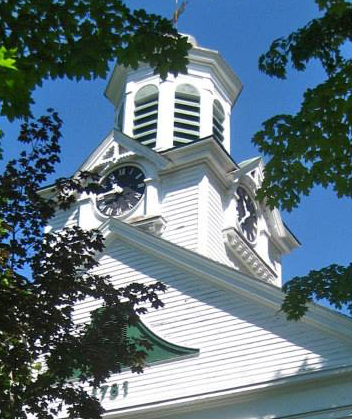
 Community Church of North Orange & Tully