Strawberry Shortcake and 4t of July Raffle on June 25th 2-4pm. Join us for good company and good treats!!

Before we get to Matthew, let’s explore a little bit more about the story of Jonah. Jonah reminds us that we do not have to be perfect to be loved by God. We do not have to be perfect to be special in God’s eyes. Jonah reminds us that we can run away from what God asks of us and we will be forgiven by God and can begin anew.
The story of Jonah ends on a question from God: “Should I not be sorry about Nineveh with its 120,000 people, as well as cattle without number?” I love how Desmond Tutu answers this for the kids: “Those are your enemies, not mine.” One of the biggest questions that Jonah brings up for us, with all of its animal references, is: who is worthy of divine mercy? Not just humans, Jonah’s people, the Nineveh people, but how about the animals who also work as the hands of God in the world.
Jonah ends on a question. It’s another one of those delightful never-ending questions.
Our Mathew passage also sends us on a quest to “go and learn”. Ponder this. Reflect on that. Question that. Explore this.
Our passage is also not long after the Sermon on the Mount, so please sit with the word Mercy as we continue together. It’s highlighted in the reading in the order for the service. Mercy.
We do all these wonderful things. We follow Jesus. We work for God (whatever that means to you or whatever word you use to define God). We obey the rules. But perhaps, we are asked to listen to our hearts and put mercy before everything else.
Let’s consider for a moment: who’s invited to our table for dinner? Our table, our own dinner table. Who’s not invited? We may forgive. We may love. But we don’t always invite everyone to our table, even the everyone we love and the people we have worked so hard to forgive. PAUSE. I always like to say just because you love and just because you forgive, does not mean you invite certain people over for tea. Remembering that we put up boundaries to keep ourselves safe and that’s okay (and “safe” is a broad word). And the other reminder, we don’t put up walls just because we don’t want to be annoyed.
Who’s invited to God’s Table? Who’s not invited to God’s table? How far does God’s mercy extend? I don’t know, I’m pretty impressed that Jonah is a prophet of God and he ran away as far as he could in the other direction from what God asked of him. Practically to the ends of the earth to get away from where he was supposed to be. He was scared. Metaphorically, I’m pretty sure I’m guilty of running away, very fast, very far, in the other direction from where I know I’m supposed to be. So, I find this pretty heartening. God Loves. God Forgives. I’m still special in God’s eyes…despite.
Here, in Matthew, Jesus brings another outsider to our table for dinner. PAUSE. No, it’s not the lowly and the poor and the destitute. The people we expect Jesus to bring to the table to make us uncomfortable. No, it’s not the lowly and the least that he just talked about in the Sermon on the Mount. No, he brings to the table the privileged and the powerful. Matthew. Matthew the tax collector.
He invites Matthew to the table. A tax collector. No one likes the tax collectors. No one trusts the tax collectors. They are considered thieves: a bit for Rome and…a bit for me.
Jesus is always turning our presumptions on their heads. Jesus is calling “the bad guy” to be a disciple. Jesus doesn’t seem to follow the rules, not even his own rules. He chooses mercy always, over sacrifice. Mercy over the black and white rules. Jesus creates confusion in us, questioning, and questing. Perhaps the question is who is lowly? Who is forgotten? Who is truly “in need”?
He asks of us not who we were. Not even who we are. But who we are becoming!! That’s faith in us. That’s mercy.
Yes, you ran away, but come back and become.
Yes, you are the tax collector, but come back and become.
You are more than your fears. You are more than your labels.
Becoming. That’s love.
We’re asked to continually ask questions. Ponder the questions (and our own answers change—that’s good). Make mistakes. Go and Learn. Grow. Become.
A very scary place is “I already know”. I know who belongs at the table. I know who doesn’t. A very scary place is where there is no room for mercy, because of the rules. This is what you’re supposed to do. This is how you do it. These are the good people. These are the bad people. This is how it’s always been done, we can’t change that!
Perhaps, in a way, Covid opened us up to a place of deep mercy. Toward ourselves. Toward one another. Toward how we are present for one another and in the world. Toward grace. Maybe it was a big question that turned things upside down for us and offered us an opportunity to … become. As a church, as a people, as individuals.
Rules give us lots of periods with no room for more. The end point. Perhaps we need more ellipses and question marks…
Openings for us to ponder and discover and become. Not who we were. Not who we are. But who we are to become.
If God is merciful, perhaps this is a call to us to be merciful.
If God is forgiving, perhaps this is a call to us to be forgiving.
If God is loving, perhaps this is a call to us to be loving.
If God thinks I am special…perhaps this is a call for me to find the specialness in everyone else.
Jesus invites us together in a motley crew of the lowest and the least and the richest and the privileged. The lost and forgotten in all walks. All together at one table. He seems to invite…everyone. God invites everyone. Who do we exclude?
God’s mercy, love, and forgiveness. Jesus’s open hand and open heart. These are gifts to us. Our blessings. It is also a call and a challenge. How do we love and forgive when it’s the hardest and we don’t want to? How do we invite everyone to a table when it’s the hardest and we don’t want to?
Jesus says, I desire mercy not sacrifice. Mercy brings us together into a sort of wholeness. Maybe messy, but still whole. Sacrifice cuts and divides and separates and minimizes us. It may seem clean, but it’s not wholeness.
When we’re comfortable at the table, what do we learn? When we invite a motley crew to the table, we invite questioning and questing. We have to dig deeper into our own wells of peace and grace.
We are here to practice love. Love that gets into the messy, the dirty, the ugly, the unhappy, the despairing of life to guide back to wholeness and to a whole world of people. Love as work. Mercy, not just when it’s easy. Forgiveness, not just when it’s easy. Prayer, not just when it’s easy. Prayer when we’re in the belly of the fish…
Who’s invited to the table? Those who need nourishment. We feed the hungry and we feed the hungry. We feed those who need bread and drink, tangible sustenance. We feed those who need the nourishment of love, mercy, forgiveness, and compassion. When we share food and drink with one another, it spreads. When we share those other nourishments, it also spreads. Maybe even father than that which nourishes our body, as the intangible and infinite things that nourish the soul.
Jonah ends on a question. Jesus is always questing and questioning. Let us quest with questions. Not to find answers, but to marinate in the Mystery of it all.
How far does divine mercy extend?
How far does God’s love extend?
What does it mean to desire mercy not sacrifice?
Go and Quest. Go with Questions. When in doubt: love. Love yourself. Love your neighbors. Love your enemies. Love God (whatever that means to you).
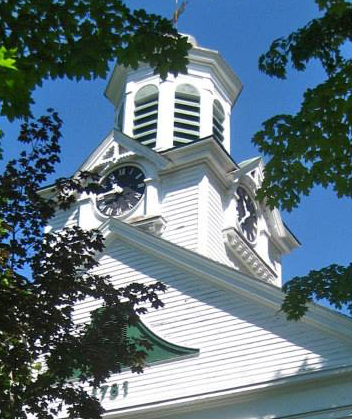
 Community Church of North Orange & Tully