- Watch the recording HERE
- CROP Walk for Hunger today at 2pm in Shelburne
- Harvest Supper on November 2 at 5:30pm (please RSVP for eat in or take out by October 26th)
- Nate will be offering the Reflection next Sunday, please join us (no Zoom/remote option)
- Council meets next Sunday after Church (no Zoom/remote option)

Start this week with my favorite shares from the week:
- A friend lamenting that we should probably start thinking (and acting) from WWJD again.
- Kids give such unconditional love. To them, we are always are beautiful and perfect. (And the inverse)
- Where there is love, nothing is too much trouble, and there is always time. (Unknown quote)
These all seem to fit nicely into where we’re going this week. Our universal theme is Enfolding Love. PAUSE. This is a reminder that it takes vulnerability to truly love. It’s true, think about the people we love the most. They know our secrets and our sore spots. Enfolding Love is a reminder that we need each other. It is a reminder that we need God.
Our reading this morning reminds us that we are children of God. It reminds us that there is oneness and unity between us. It is a reminder to hold (cling) to one another and to hold to (and cling) to God.
I could maybe end there. We could just sit and absorb all those lovely nuggets above and take them into a new week.
The words in this scripture reading (Genesis 2: 18-24 if you would like to read it–it’s the second creation story) are echoed in the traditional Celtic marriage vows: “You are blood of my blood and bone of my bone. I give you my body that we two might be one. I give you my spirit til our live be done.”
Bone of my bone, flesh of my flesh, represents a promise, a promise in our close family relationships. Our partners. In fact, the word Ezer that is used in this passage means “partner”. God is creating partners for life. Of the same flesh. Of the same bone. We aren’t meant to be alone. We need one another. We need connection.
The word “cling” in this passage is also a reminder that we need one another. Cling tends to be a bad rap. Who wants to be described as clingy? PAUSE. Maybe we all should. Cling is an anchor. We cling to one another in our closest human (and perhaps more-than-human) connections. We cling to God. We cling to our anchors in this world—ideally our anchors are our deepest values.
This passage reminds us that we are One, together. We are brothers and sisters. I had a Yale meeting this week with colleagues who are choosing to continue to meet and we have started to refer to each other as brothers and sisters.
Using the words “brother” and “sister” is a way of choosing how we will see and treat one another. If we’re just colleagues or acquaintances or even friends, we might treat each other differently—as separate or even “other”. She’s lovely, but she’s Jewish. He’s lovely, but he’s not American. She’s lovely, but she sees things so differently. By choosing brothers and sisters, we choose to see where we connect instead of where we are different (divide). In calling one another by a familial term, we are choosing to be family.
What might happen if we consider all of our fellow humans on this journey brothers and sisters? That sounds lovely. If we considered everyone Children of God…with us. Together.
When we read scripture, we discover that the Kingdom of God is relationship. Relationship with one another. Relationship with Jesus. Relationship with God. We are all one. We are all kin.
It’s connection. Even the naming of the animals is meant to build connection. Remember the story of the bird that comes to our yard? The one we begin to feed. We learn to recognize it as not just a bird, but as a bluebird. Then we recognize it as one specific bluebird. Maybe we discover it’s male or female. We name the bluebird. We look forward to this specific bird. We tend and worry about his creature. We create connection and sort of a link, a string that binds us together in some way. We recognize another creature and we become kin. The naming of the animals is a building of connection. It’s the first step toward not begin alone.
Maybe the shift from using the word kingdom to kin-dom is not so dramatic or wild a shift in Biblical wording.
Children are the most beautiful description of a deeper connection that becomes cling-y. They, quite literally, cling to us. Around our necks, around our legs, and in our laps. They also depend on us completely for food and shelter and security. This describes one of our chosen “obligations” of life or what might be better called our chosen “duties”. We choose to tend to our children and our children to tend to us. It’s an infinity loop of love that I think describes where this reading leads us quite beautifully. Kinship. One-ness. Duty. Love. Connection.
Where there is love, nothing is too much trouble, and there is always time.
Maybe this is why the kingdom (kin-dom?) of heaven belongs to the little children. They know how to be vulnerable and loving. They know how to be vulnerable and connected. They know how to need and cling…how to be anchored in need and Love.
We need one another. God sets the stage and Jesus shows us the way. Jesus shows us love in practice…even, and maybe especially, when it is really, really (really) hard. Jesus teaches us to practice such compassion that even death cannot break it. Jesus teaches us to forgive when it would seem impossible. Jesus teaches us to make way for love first and at all costs.
Where there is love, nothing is too much trouble, and there is always time.
God sets the stage. Jesus teaches us how to live on this stage. We know that our faith asks us to put love first and foremost. To cling, with love, to one another. To cling, with love, to God. To be children, sisters, brothers, kin, partners, and helpmeets to one another on this journey of life. To choose our duties in this life based around Love First. To Love so deeply that we are not afraid to create a love around our deepest and most important values and to cling to what matters most.
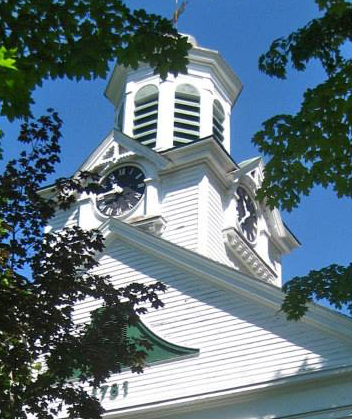
 Community Church of North Orange & Tully