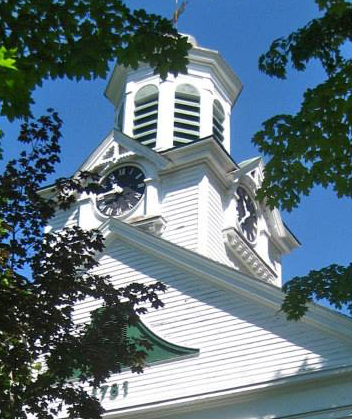
- We are currently collecting for Fuel Assistance to help four local families with 100 gallons of oil each.
- Lenten Fridays with INC continue this Friday at 1st Universalist Church at 6pm.
- Lenten Home Contemplative Practices with Owen and myself can be found on our website with a new one posting each week until Easter.
- Easter Sunrise Service at 6am. Regular Easter Service at 9am.
- Discussion Group & Confirmation Studies today and April 27th after Church.
- Watch the recording HERE

The most interesting thing about this story is that we are all three of these persons within. The straying brother. The angry and judging brother. We are also filled with the potential to offer one another, regardless of circumstances, unconditional love.
Which brings us to another essential in the wilderness of these forty days: Coming Home. It seems so simple…just come home. And yet, it’s very much not so simple.
Imagine that you’ve just completed a pilgrimage. You’ve been gone from home (wherever you have imagined your pilgrimage to be) for weeks. You’ve been mostly in solitude. You haven’t been on social media. You haven’t watched the news. You haven’t watched any movies or TV shows. You haven’t done a lot of reading, either. You’ve just been walking.
While you did visit with other travelers, pilgrims, and visitors in places along your journey, you’ve been mostly…alone and quiet.
Now, imagine coming home. PAUSE.
We’re often not very good at coming home. We’re also not very good at accommodating those coming home. We naturally gravitate back toward…”normal”. We expect “normal” to unfold naturally. Maybe the problem is that there is no “normal”, but that’s another story for another day.
Let’s imagine or remember another, more common, example. A wonderful vacation or taking time “off”. Go ahead, imagine this great time. PAUSE. Now, imagine or remember, the coming home. PAUSE. You’ve just traveled back (car, bus, train, whatever) and pulled into the driveway. It’s so nice to come home…
But you’ve got laundry to catch up on. You’ve got cleaning that needs to be done. Emails to check. Phone calls to return. That’s if there’s been no “disaster” happening at home. Has anybody come home to flooded basements, a busted hot water heater, sick pets, or the like?
And because you wanted to get as much out of your vacation as possible, you have planned to go back to work the very next day.
Eek. Yikes. We’re not very good at coming home.
We’re very rushed. Our vacations are rushed. Our coming home is rushed. Even on the day to day, we rush through from one thing to the next without any pause to transition and integrate.
We also expect things to be the same, even if we’ve changed. And journeys always change us. Especially ones echoing the forty days. Intentional challenges like the ones we do for Lent and also the unexpected (and often unwanted) challenges that arrive on the journey of life. We want things the stay the same. Other people expect us to be the same. This of often where conflict, confusion, and messiness comes in.
Look at Jesus. He comes out of the desert and goes home. What happens? He has been changed and he ministers. His own home town tries to throw him off a cliff. They are not ready for this change and transformation.
In this week’s reading, the straying brother comes home and his own brother cannot accept that he may have changed.
It is a beautiful and rare thing that he is welcomed and loved unconditionally…whether we have changed or not. The father doesn’t even question his son before calling for a feast. That’s love. That’s the kind of love we are called to offer toward one another. All the one another…even our own versions of the brother we’re angry at, who reminds us that life is unfair, the one we don’t want to forgive, and the one we certainly don’t want to invite home.
We have so many examples of stories of coming home after a journey that changes us. We have Bible Stories. Other Sacred Stories. We have human experience journeys—memoir stories. We have novels. A great example is Frodo who comes home so changed, he cannot reintegrate. He has to go on to the Grey Havens. Catniss Everdeen from the Hunger Games comes home expecting things to return to “normal”. But everything has changed for her and everyone connected to her.
In many ways, all stories are about a journey, transformation, and coming home. It’s one of the reasons we love stories in all the ways. They teach us about ourselves, they teach us how to live well, and they teach us about Grace. Even when we’re reading the most unlikely of thing, we might seek for God/the Divine/Grace/Universe in the story.
It is important to plan for…”the other side” and the coming home. One might argue that it is another essential for the spiritual journey. How do we reintegrate after an experience of transformation? Big, small, and everything in between.
Often, we don’t. We shrink back and away from the possibility and potential. We are reabsorbed into the usual habits and the how it was. We don’t allow our transformations to truly transform us. This is why coming home, and planning for coming home, is so important.
When people reintegrate, or come home, after committing crimes or after drug and alcohol rehabilitation there must be a plan to navigate the same people, places, and things that started the trajectory toward crime or addiction. There must be a coming home plan. When those coming home from those sorts of journeys do not have a plan to navigate people, places, and things…there is often a relapse.
We expect that because we have changed, the world around us will change too. Or will at the very least accommodate and help us. This is often not the case. Jesus gets run out of his own town and the “good” brother want’s nothing to do with his drinking, gambling, sinning brother.
It is vital to have a coming home plan. It is vital to know who supports us coming home from the journey and who does not. We need to be clear on who will support us on the continued journey of transformation that is the possibility that comes out of the wildernesses. We need to be clear on the people, places, and things that will potentially hold us back. We need to consider how we might navigate those trouble spots. We need to build our support networks. Sometimes, we are so transformed that “home” must change for us.
This is scary. It’s why we like “normal” and our usual habits. It’s why we resist change in ourselves and one another. But we are meant to grow and change and be transformed. It is the call of Grace. It is the potential that comes of struggle.
After long journeys in the wilderness, we must plan for our coming home. Nothing is the same and we are often exhausted, drained, and run down. We also need transition time of rest and recovery. Perhaps, spiritually known as contemplation and stillness. This is where real healing and growth happens.
Healing on all levels (body, mind, and spirit) takes time for rest, recovery, and reintegration. Reintegration happens best with intention and planning. It is not running away to the next journey and challenge. It is not sinking back into the “old normal”. These are often the avoidance tactics of the real and deep transformation, because in some ways, the coming home is the hardest part.
How do we come home after a journey of change and transformation? How do we move forward when we have changed and the world may or may not accept this change? We plan.
Who accepts us unconditionally?
Who runs us out of town or off the cliff?
Who helps us find sanctuary?
Who is angry that we have come home different?
Who is inspired by us?
How do we come home? How do we welcome those coming home? At what times are we the first son running away from home, obligations, and connection? At what times are we the second son who does not want to forgive, share, and let his brother come home? In what ways do we avoid change and transformation (stay the same; stay “normal” and “safe”) by running away or blocking the front doors? Who are we when we run away or block the front door?
At what times are we the one loving and celebrating…unconditionally? Who are we when we welcome and love…unconditionally?
Remember, we have all three within and we can choose who to be. We can run away and hide. We can block the front door. Or we can choose to practice loving ourselves, one another, and the whole of this world…unconditionally.
One of our potential guides on this journey of life is to deeply reflect and plan for how to Come Home.
 Community Church of North Orange & Tully