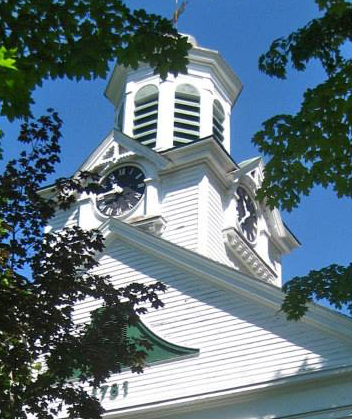
- Annual Meeting May 17th after Services; your voice and vote matters to the continued future of CCNOT. Pot Luck to follow.
- Upcoming Membership Service on May 17th: if you have been considering becoming a member and would like more information, please reach out to Charlotte.
- Discussion Circle is on the last Sunday after Church; this month we will look at the Sermon on the Mount. These discussions are here to to inspire, teach, guide, and challenge us–all are welcome to join us (this is an exploration of sacred passages, poetry, and words to inspire us toward freshness, surprise, and wonder).
Visit our Calendar of Events to explore our upcoming dates and times
Our Sunday Reflection is recorded and can be found HERE (posts each Sunday late morning or early afternoon). These words are written to be spoken aloud; please forgive grammatical and other written errors.
All are Welcome. If you are uncomfortable with the word God, please feel welcome to insert your own word for the divine or Mystery in your life (Universe/Grace/Spirit/Divine).
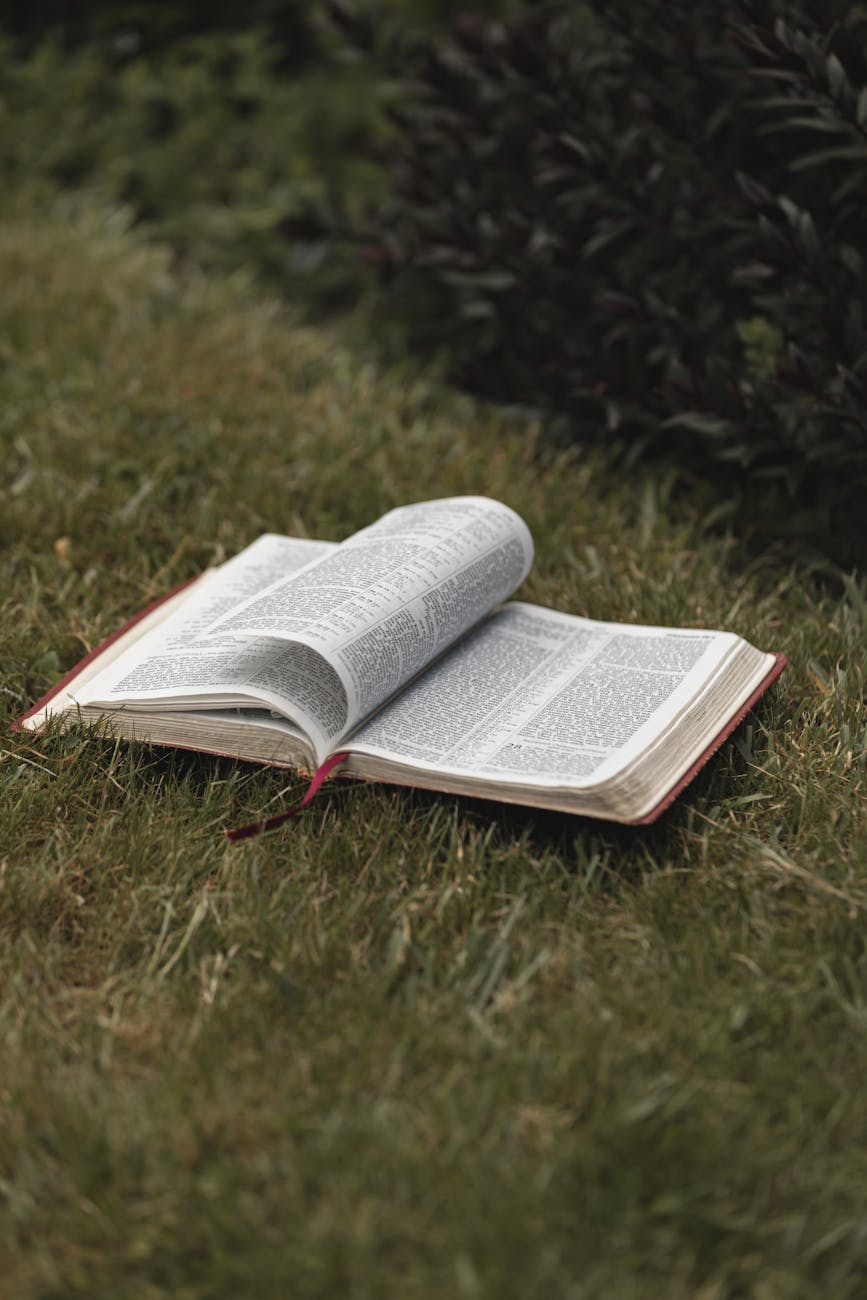
I often hear from people “I should read the Bible (again).” “Where should I start?” “I should start at the beginning.”
I also hear, “I started reading the Bible and I just can’t keep reading it (for whatever reason).”
This may sound familiar and if it does…first of all: it’s okay. There’s no need to blush or feel guilty (or worse: shame). There’s no need to pretend or compete or fudge it. All of that probably goes against the point of reading it.
I think the reading the Bible question is similar to the “what version of the Bible should I read?” question. One should read the one that one will read. “Where to begin?” One should begin with the book one will read. You know…the stories and the parts that are enjoyable or interesting.
Reading the Bible shouldn’t be some strange punishment. Like the harder it is, the more points you get. Or the more you read, the more points you get. It’s not easy, but it shouldn’t be painful. We read it to be spiritually nourished.
There are so many books in the Bible to choose from. It’s like a whole library on one big book! There’s history and narratives. There’s poetry and love songs. There’s laments and hymns. There are letters and stories and parables. There are love stories. There are battles and intrigue. There’s something for everyone.
I always feel that a good place to start is with the gospels. The story of Jesus. Sometimes, we get lost in the other parts that can be confusing, overwhelming, and distracting. Or we start to take quotes out of context to support our beliefs, instead of for God. If reading the Bible is calling to you, deeply knowing the Story of Jesus gives everything else a stable and solid ground.
It’s like the first stone in the ripple effect. It sets the stage and the rest encircles this “root”, this solid beginning. The nearer ripples might be Acts which is the story of “what comes next” or the letters as the early Christians try to “figure it out”. Another layer of ripples might be the Old Testament. Starting with the lens of the gospels, it gives us an anchor of understanding and roots us in Love. It helps connect the dots of what came before.
The gospels are also enough on their own. The gospels are quite powerful all by themselves. One could live one’s life from just there and be deeply and spiritually nourished. Sometimes we make things big and complicated. Like more is always better, but that’s not always so. Sometimes, we might do better with smaller chunks…even “just” the Sermon on the Mount which could inform an entire life. I might argue living just knowing and living the Beatitudes could be enough. Or the parables. Or a single passage: Love thy Neighbor. Love thy God. Forgive them.
I know of many a non-christian who are spiritually nourished by the gospel stories. The Dalai Lama is one (I didn’t say I knew them all personally). The Dalai Lama holds a deep respect for Jesus. I have known Hindu devotees who quote Jesus. There are many a Muslim who hold a deep respect for Jesus. Not to mention our Jewish friends in faith.
Perhaps the gospel stories as the center ripple reminds us that the work we do, especially when anchored in something bigger than ourselves, ripples into the world to make changes toward peace and love, connection and community, healing and tenderness. Our work may seem to make such small ripples, but every ripple influences change and together can change the world. Especially when those ripples overlap with others who are also rippling peace and love, connection and community, healing and tenderness.
The gospels are a beloved story and a beloved foundation.
Reading the familiar and beloved and comforting story also shows us things we didn’t know were there in the story, enhancing our understanding as we read the different versions. We should always read to discover something fresh and new. Even, to let it surprise us—that’s where our own growth happens. If we are just looking to reinforce what we already know, we may have lost touch with the awe and wonder of connecting with that something bigger than ourselves.
Sometimes, we discover something we never knew before or we understand in a different way…the a-ha moments. We might discover that what we thought was there…isn’t actually there. There’s a lot of oral tradition that isn’t actually in the Bible. I have a professor that always, always says: always look it up for yourself, especially before you quote it publicly.
One of my favorite “not there’s” is “God helps those who help themselves”. It’s not there. It’s not anywhere in the Bible. And coming back to the Beatitudes: God blesses the meek, the poor, the humble, the mourning, the hungry, the peacemakers, the persecuted. The hopeless and the lost. It’s right there, very clear: God helps the helpless.
We don’t have to pull ourselves up by our bootstraps to be beloved children of God. We are always beloved and nudged…and sometimes downright pushed.
Let’s reflect on Jonah (our children’s story). God asks him to do something scary and he runs away! God sets him on a path to learn and grow, and he makes it harder on himself by (one could argue) trying to “help himself”. And, for the record, he’s still (very much) in need of God’s guidance and mercy at the end of the story. He is still imperfect. And still loved. It’s great.
The other great thing about the Bible is that you don’t have to read it in order. You might just explore a story you’ve heard your entire life and see what’s actually there (there’s no whale in Jonah).
As we set a foundation in the gospel stories, we can encircle them with other stories. What come after, what come before. You might be intrigued by books that are not in all of the Bibles (the Apocrypha). You might enjoy other books that have been discovered more (relatively speaking) recently. Quite fascinating ones are the Acts of Paul and Thecla, the Gospel of Thomas, and the Gospel of Mary Magdalene. And there are so many more that can build on and inform what we already know. It’s wonderful to enhance our seeking through other materials.
It’s also fascinating to read the stories of the saints, the mystics, and the faithful. Those who were discovering and uncovering what it meant to be Christian and beloved of God. Those who were called by God to start churches and charities and “homes” for God. To devote their lives to doing God’s work. There are also incredible stories of ordinary people who were inspired to thrive and survive in the most challenging of circumstances, guided by their faith.
One of the best ways is to begin our journey with a deep foundation in the gospel stories, a story rooted in incredible Compassion. Whatever our beliefs, and even our uncertainties, around the story of Jesus, there is something powerful to be gleaned from the Story that can guide us on our way in this world.
When we don’t know where to begin, but feel the need to begin…begin with Compassion. Begin with Love. Begin with the Way of Jesus.

